Dive Sites
Best Dive Sites in Sharm El Sheikh
Discover some of the best dive sites of the world!
Ras Mohammed Dive Sites
- Depth: 30 M
- Difficulty: Intermediate
- Type: Big fish, Drift dive, reef wall, reef, drop off
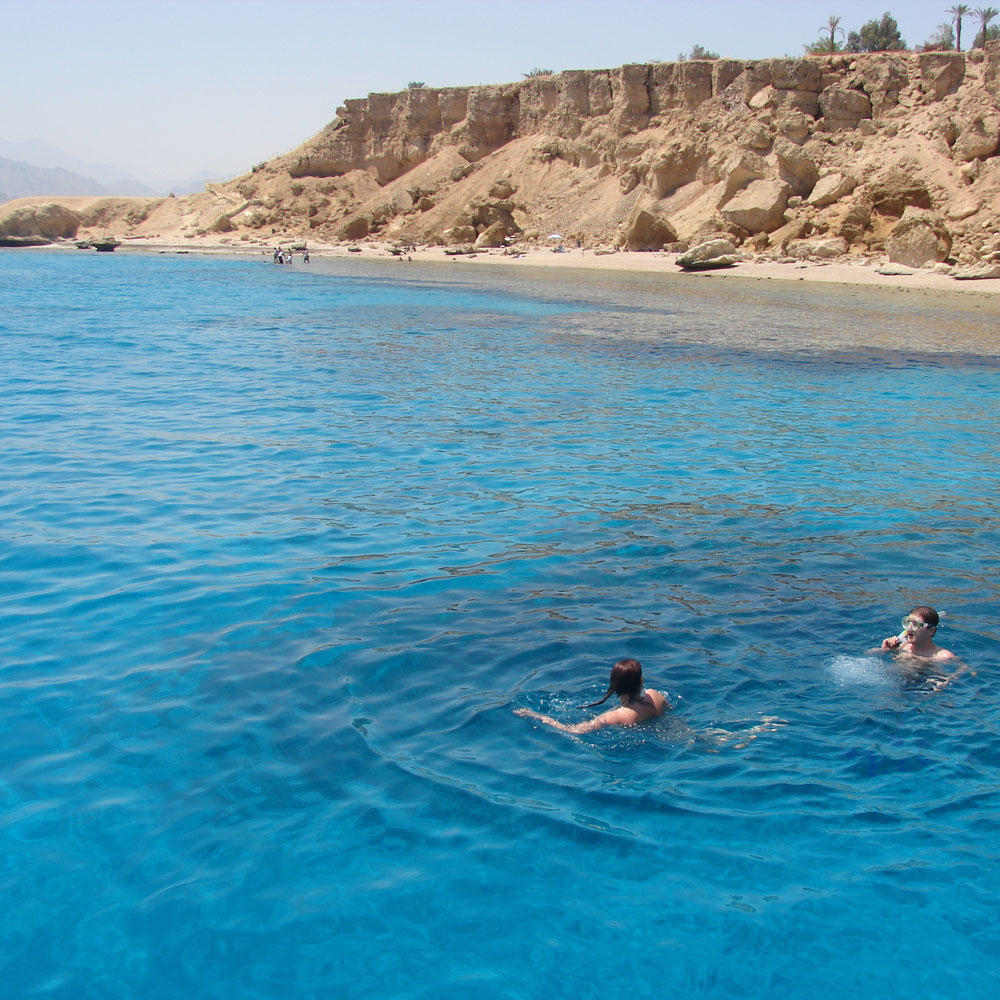
Ras Mohammed National Park is one of the most famous dive locations in the world, It was declared a nature reserve for the first time in 1983 and has been under protection ever since.
Ras Mohammed is located at tip of the Sinai peninsula and is where the Gulf of Suez and the Gulf of Aqaba meet, with and area of about 480 km2, of which 135 km are wild lands, and 345 km are coral reefs and aquatic environments.
The Egyptian government charges an entrance fee per person per entry, no matter if you dive by boat or from shore.
This money directly goes towards the National Park authorities to protect this and other unique National Parks in Egypt.
Ras Ghozlani - Ras Mohammed
- Depth: 30 M
- Difficulty: Intermediate
- Type: Drift dive, reef garden, reef, drop off, coral garden, corals pinnacles
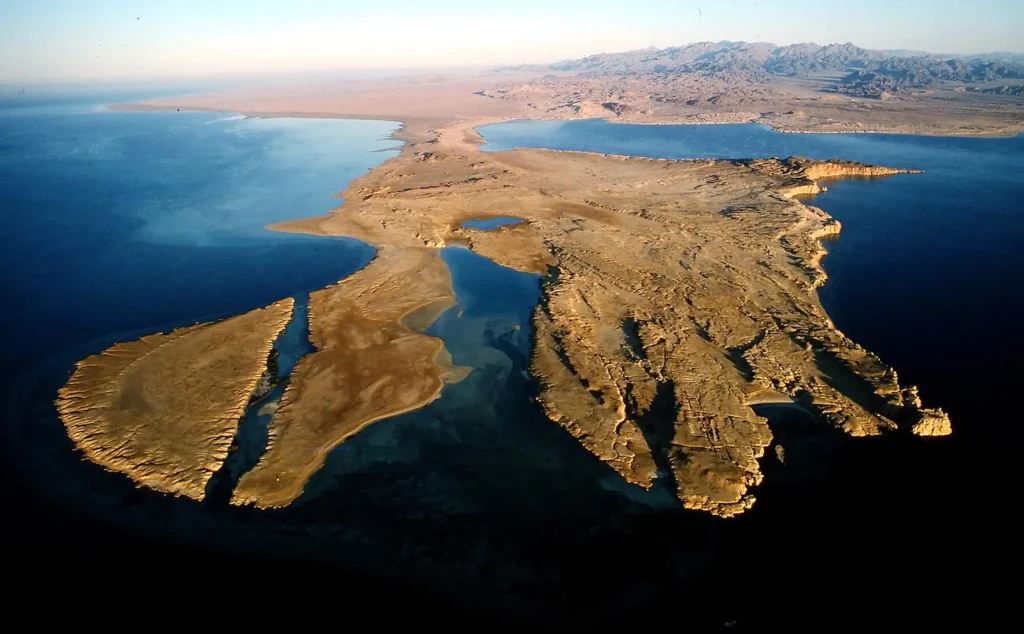
Ras Ghozlani Dive Site offers a captivating underwater world with depths ranging from 0 to 30 meters, making it an ideal location for intermediate divers.
As you delve into the crystal-clear waters, you’ll embark on a drift dive adventure, exploring stunning reef gardens, drop-offs, and vibrant coral gardens.
Marsa Bareika - Ras Mohammed
- Depth: 40 M
- Type: Big fish, shallow, coral garden, corals pinnacles
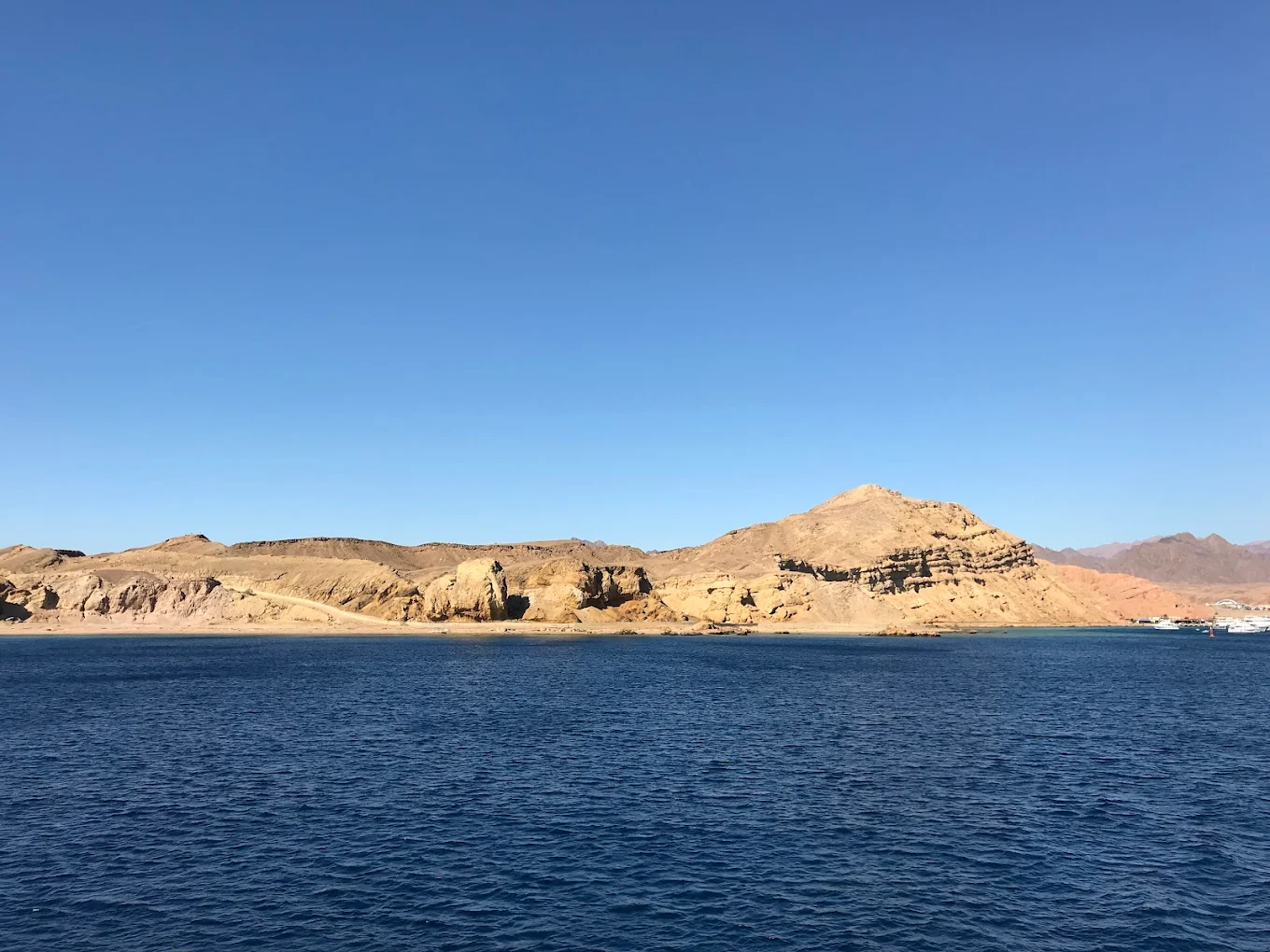
Marsa Bareika meaning Blessed Dock or calm big pond depending who you ask but essentially having the same meaning of a bay that would have been shelter for fishermen away from winds and waves and remains so for dive boats today. (Marsa is a place where boats can moor or dock and Bareika comes from the word Baraka meaning bless or Birkah meaning large pond). The bay has many protected areas along its shores as these sandy beaches are where turtles come to lay their eggs. In the far right corner of the bay however is a dive site with fixed moorings.
The dive itself starts with a large sandy plateau which is great for Macro photos, nudibranch, shrimps, and even sea moths are found in the area. There is a beautiful canyon that starts at 6 metres guarded by glass fish and lion fish, the canyon descends to 30 metres but keep an eye out on the blue here as whale sharks and eagle rays are often spotted during the summer months. At the end of the drift dive there is a stunning red anemone in 6-7 metres and a perfect place to finish your safety stop
Ras Za'atar - Ras Mohammed
- Depth: 30 M
- Type: Big fish, Drift dive, reef wall, sharks, reef, drop off
Opposite Ras Ghozlani at the southern entrance to Marsa Bareika Bay lies Ras Za’atar, Za’atar in Arabic means Thyme and Ras meaning head gives it the name “head of thyme” in English.
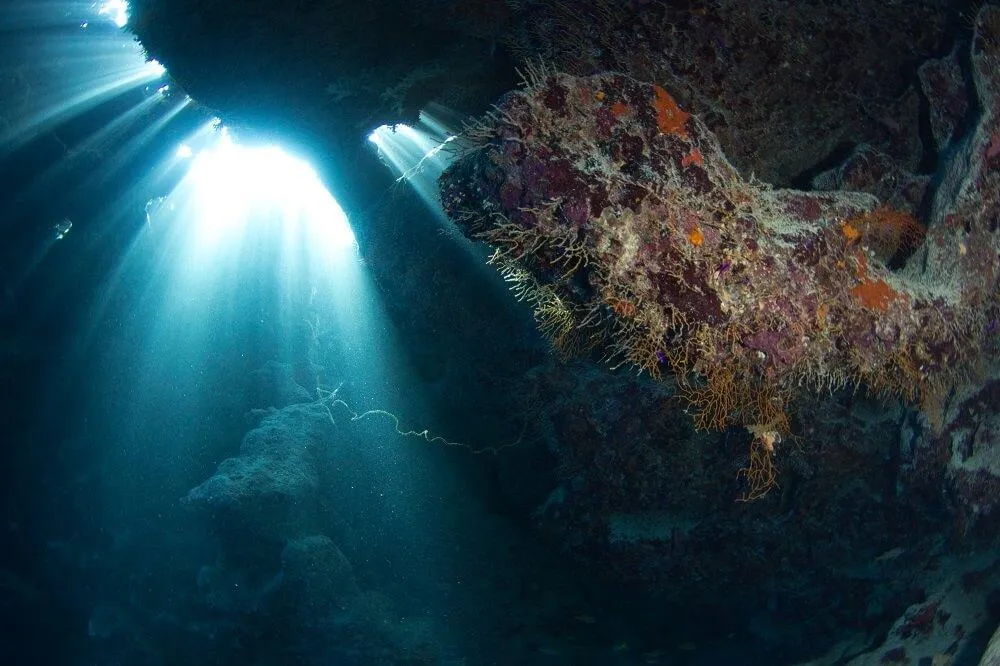
The dive starts on a sloping wall best done in 15-18 metres. The wall has many cracks forming small overhanging ledges, About 30 mins into the dive there is a chimney for those wanting moody shots with rays of light bouncing off the cliff wall, this is a great photo opportunity. The corner is a plateau and here we often see more of a current, as the current brings in more nutrients to the water, the corner is a lively reef, here we are more likely to catch a glimpse of larger animals.
Jackfish Alley - Ras Mohammed
- Depth: 30 M
- Type: Big fish, Cave, Drift dive, reef garden, sharks, reef, coral garden
Jackfish Alley Dive Site is an aquatic paradise that beckons divers to explore its enchanting depths. Situated in the northern reaches of the Red Sea, this underwater gem is a captivating blend of natural beauty and marine wonders.
As you descend into the depths of Jackfish Alley, you’ll discover a world unlike any other.
This dive site’s unique charm lies in its position between two other fascinating locations: Ras Za’atar and Shark Observatory. It’s a place where the ocean comes alive, and every dive is an exhilarating adventure.
Eel Garden - Ras Mohammed
- Depth: 30 M
- Difficulty: Intermediate
- Type: Drift dive, reef wall, reef
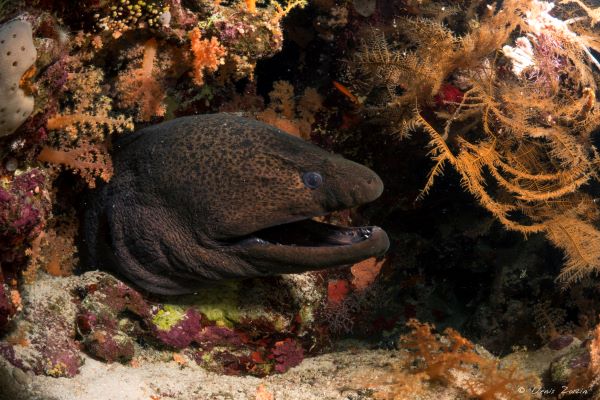
Eel Garden Dive Site invites you to embark on an extraordinary underwater adventure. Nestled between two iconic dive sites in Sharm El Sheikh, Jackfish Alley and Shark Observatory, it holds a unique allure.
This hidden gem promises an underwater world like no other, where captivating marine life and breathtaking coral formations await your discovery.
Prepare to be mesmerized as you explore the depths of Eel Garden, where every dive reveals a new chapter in this underwater saga.
Shark Observatory - Ras Mohammed
- Depth: 100 M
- Difficulty: Intermediate
- Type: Drift dive, reef wall, reef
Named after the towering cliff of fossilized coral and viewing balconies at the most southern point of the Sinai you could once observe sharks swimming below in the deep water. Although still occasionally spotted, sharks are not in abundance here as the name suggests.
Starting the dive under the cliff just before the second viewing balcony the cliff wall extends below the water level to a depth of approx. 65 metres. Drop down to 15 – 18 metres to get the best out of this dive, follow the wall on your right as it undulates like the cliff above. Always keep an eye in the blue as you follow the wall as turtles often swim by and large groups of jacks can often be seen.
Anemone City - Ras Mohammed
- Depth: 30 M
- Difficulty: Advanced
- Type: Drift dive, reef garden, reef, coral garden
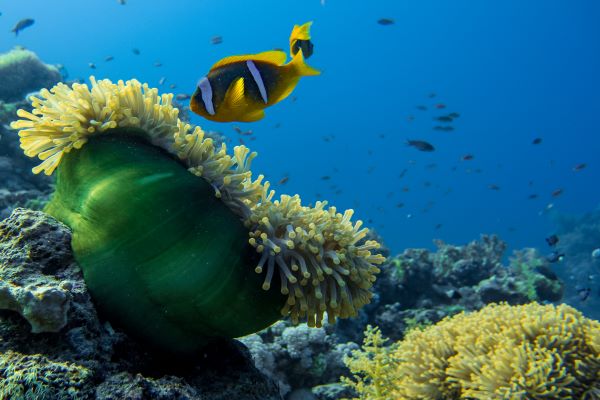
This site is usually dived at the beginning of a dive to shark reef, the reef is a plateau that juts out from the reef wall starting from 5 metres to the drop of at 25m with deep blue water beyond that. As the name implies the reef is home to hundreds of anemones with clown fish and damsel fish. The edges of the plateau have large table corals and beautiful broccoli coral covers the area. Leaving Anemone City behind you set off into the blue waters and in a few minutes the looming shadow of Shark Reef will beckon you.
Shark & Yolanda Reef - Ras Mohammed
- Depth: 30 M
- Difficulty: Advanced
- Type: Big fish, Drift dive, reef garden, reef wall, Wreck, reef, Offshore reef, drop off, coral garden, corals pinnacles
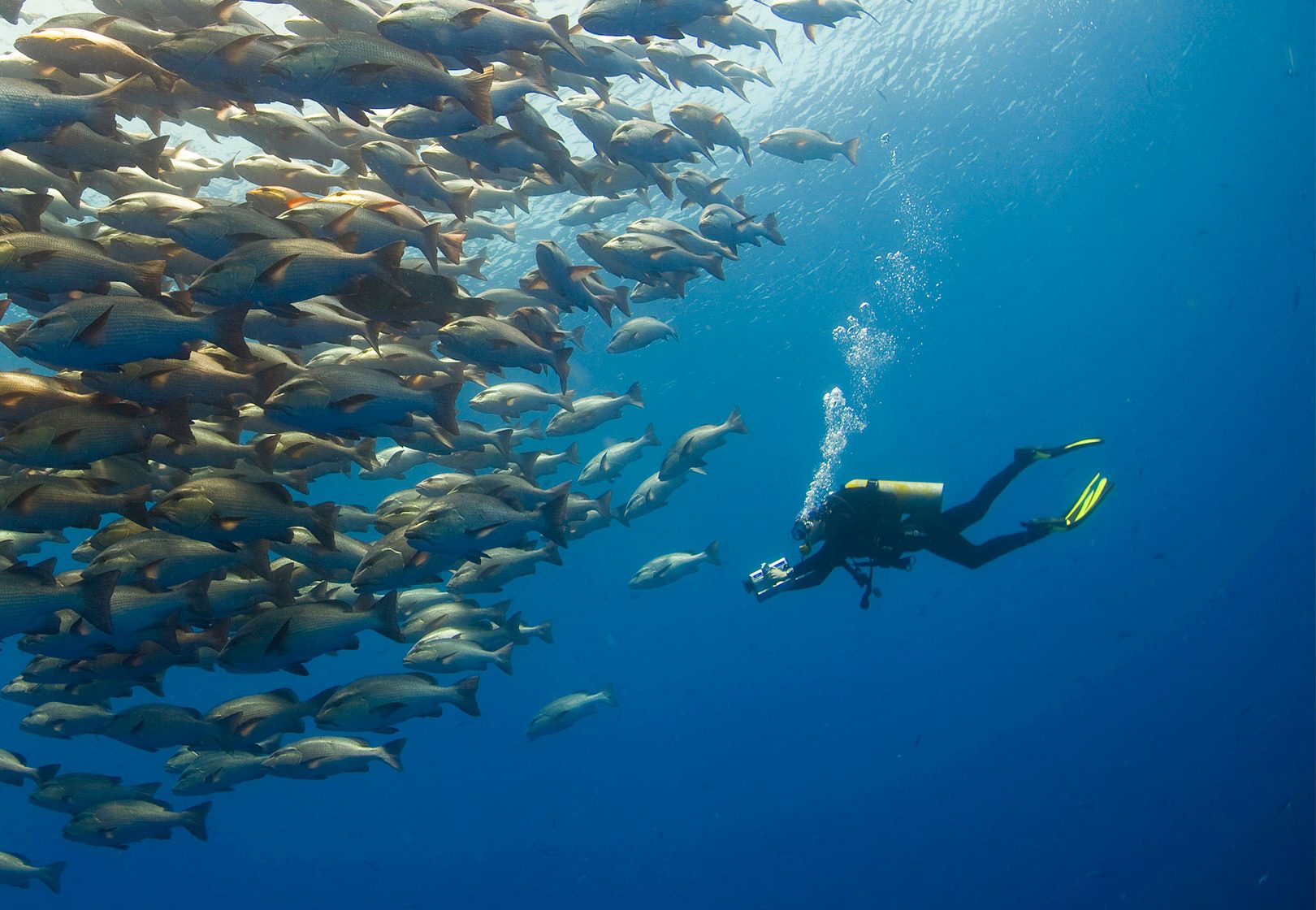
Situated at the tip of the Sinai Peninsula, where the Gulf of Aqaba, the Gulf of Suez, and the Red Sea converge, lies the renowned Shark Reef and Yolanda dive site.
These underwater treasures are celebrated as two of the world’s top ten dive sites and for a good reason.
Shark Reef and Yolanda boast a unique and vibrant underwater world, nourished by nutrient-rich currents. These dive sites are a haven for marine life and coral enthusiasts alike.
SS Dunraven Wreck - Ras Mohammed
- Depth: 29 M
- Difficulty: Intermediate
- Type: Drift dive, Wreck, corals pinnacles
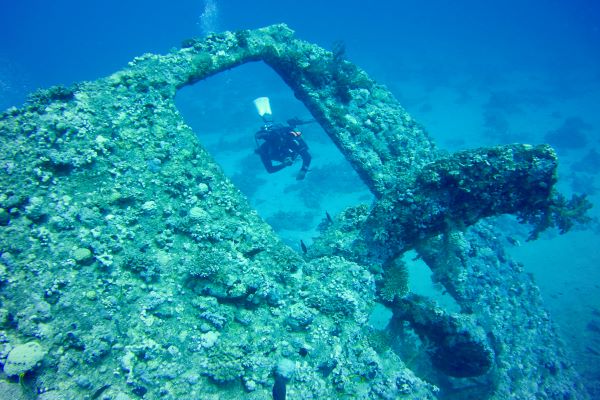
SS Dunraven built in Newcastle, England in 1873 was travelling between India and the UK when during the night of April 25th 1876 a large black looming object appeared in front of her. This object was the reef of Sha’ab Mahmoud which lies South Easterly from Ras Mohamed. Fortunately, all the crew were safely rescued the following day.
As the ship sank it turned over so now lies with the top of bow at 15 metres and the stern on the sea bed at 29 metres. The best way to dive the ship is to start at the bow and dive above her until you reach the stern.
SS Thistlegorm - Sha'ab Ali
- Depth: 30 M
- Difficulty: Advanced
- Type: Deep dive, Wreck, reef, channel
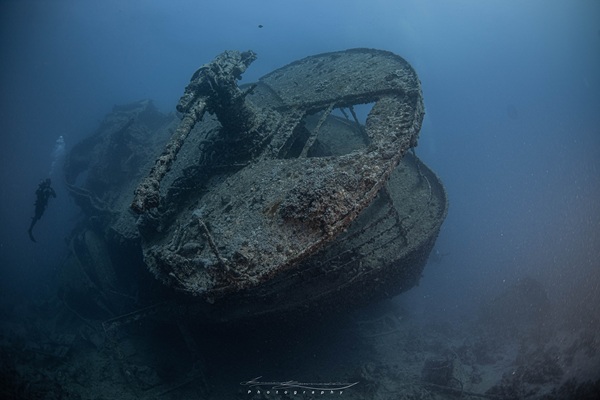
Built in Sunderland, UK in 1940, SS Thistlegorm was a British merchant ship classified as an armed freighter, sailing from England around the cape of Africa and up through the Suez and destined for Alexandria, Egypt. On the night of October 6th 1941, during the Second World War, in a surprise attack by a pair of Heinkel HE-111 bombers two 2.5 tonne high explosive bombs were dropped and sank the ship. In the 1950s Jacques Cousteau found the wreckage with the help of the local fishermen.
Straits of Tiran
- Depth: 30 M
- Difficulty: Intermediate
- Type: Big fish, Drift dive, reef wall, reef, Offshore reef, drop off
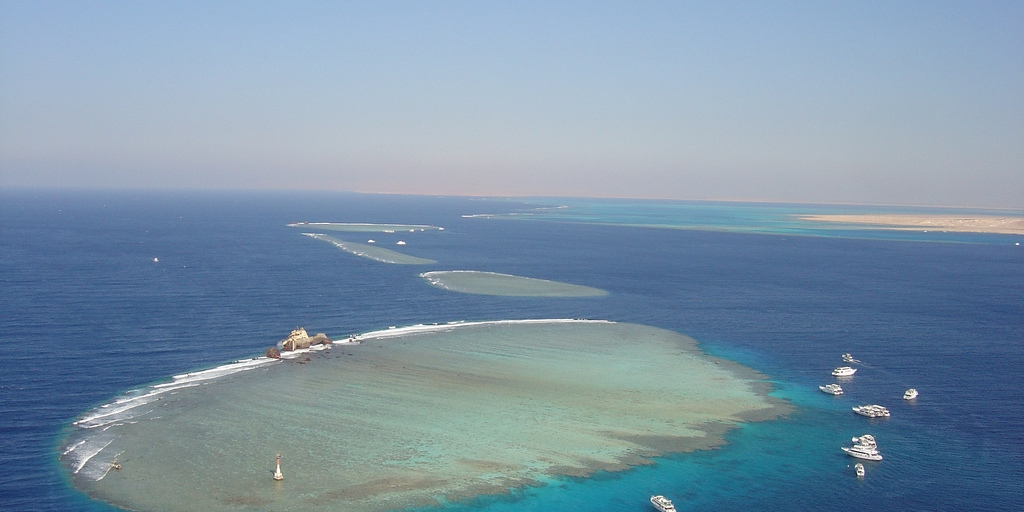
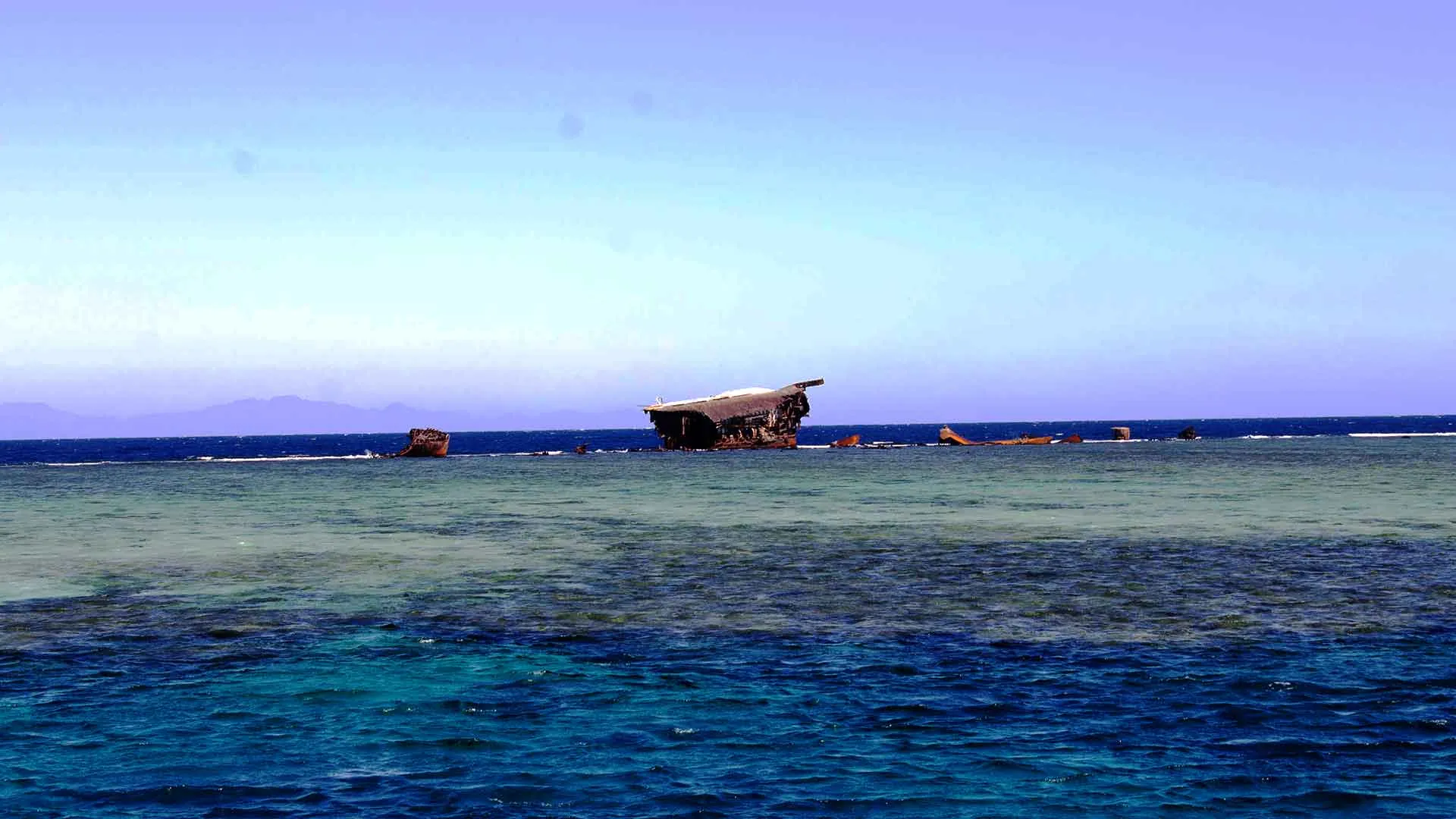
The so called Straits of Tiran are four beautiful reef formations between the Island of Tiran and the Sinai Peninsula. From north to south they are called Jackson Reef, Woodhouse Reef, Thomas Reef, and Gordon Reef. All four are extremely rich, both in hard and soft corals and show great biodiversity and many species of fish. Reef and Hammerhead sharks are likely to be seen gliding along the deeper reef edges. There are the remains of two wrecks, both on the back side of the reefs of Gordon and Jackson sitting on the surface as landmarks. Further north on the western banks of the Gulf of Aqaba there is a third more recent wreck called the Million Hope. Dive sites in the Straits of Tiran also include South Laguna and North Laguna.
Gordon Reef - Tiran
- Depth: 30 M
- Difficulty: Intermediate
- Type: Drift dive, reef garden, reef wall, sharks, reef, coral garden, corals pinnacles
Thomas Reef - Tiran
- Depth: 30 M
- Difficulty: Intermediate
- Type: Deep dive, Drift dive, reef wall, reef
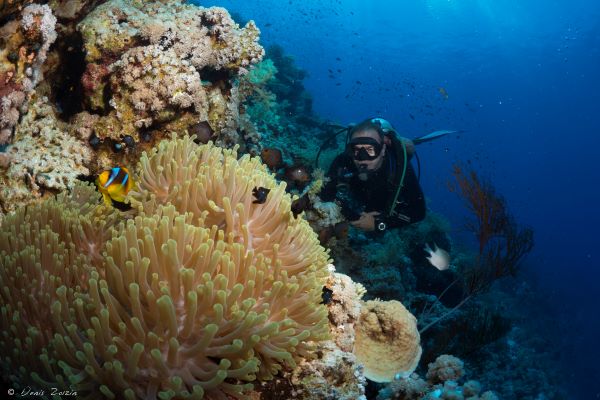
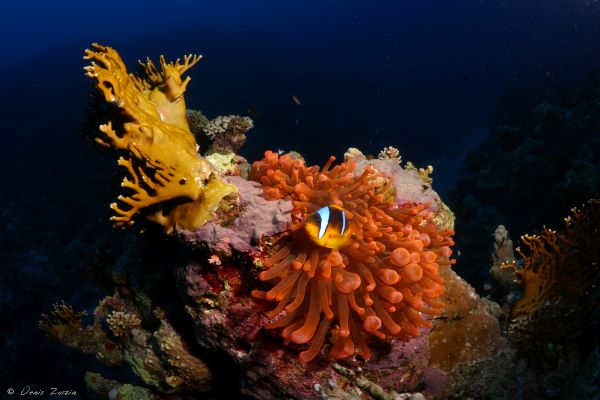
Thomas reef is the smallest of the four reefs and famous amongst Technical divers for the canyon that begins at 35 metres and descends to 92 metres and runs parallel to the main reef. The dive starts on the southern tip and begins with a colourful wall, a few metres on the wall pans out into a plateau at 25 metres with a row of huge fan corals, check the fans for long nose hawkfish hiding in the branches. A whitetip reef shark can often be seen swimming on the edge of the plateau, and schools of large tuna and barracuda can also be found here. As the reef is small currents can be strong at the most northerly tip of the reef so tuck in close to the reef, as currents also come from the back of the reef the dive can come to a standstill very quickly or if the currents are in your favour you can swim to the back of the reef where there are overhangs and schooling black and white snappers.
Woodhouse Reef - Tiran
- Depth: 30 M
- Difficulty: Intermediate
- Type: Deep dive, Drift dive, reef wall, sharks, reef, coral garden
Jackson Reef - Tiran
- Depth: 30 M
- Difficulty: Advanced
- Type: Drift dive, reef garden, reef wall, sharks, coral garden
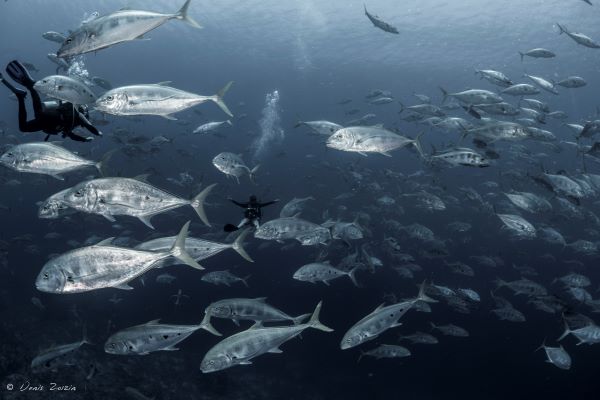
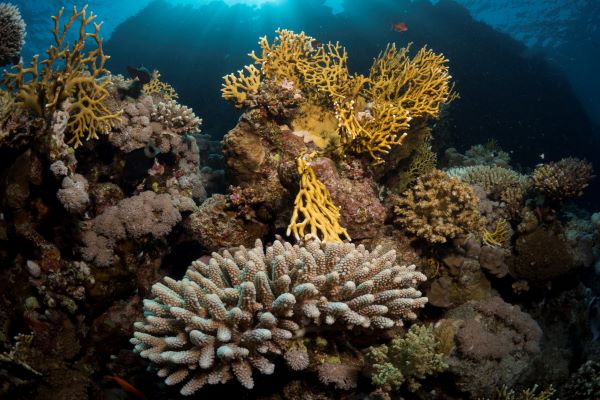
Embark on an extraordinary underwater journey with Circle Divers Dive Centre as we delve into the enchanting realm of Jackson Reef, the pristine gem of Tiran in the northern Red Sea.
Jackson Reef isn’t just a dive site; it’s a portal to a world where history meets vibrant marine life, creating an unparalleled diving experience.
Ras Katy - Local
- Depth: 25 M
- Difficulty: Beginner
- Type: coral garden, corals pinnacles
The Local Dive Sites
- Depth: 30 M
- Difficulty: Beginner
- Type: Big fish, Drift dive, reef garden, reef wall, reef, drop off, coral garden, corals pinnacles
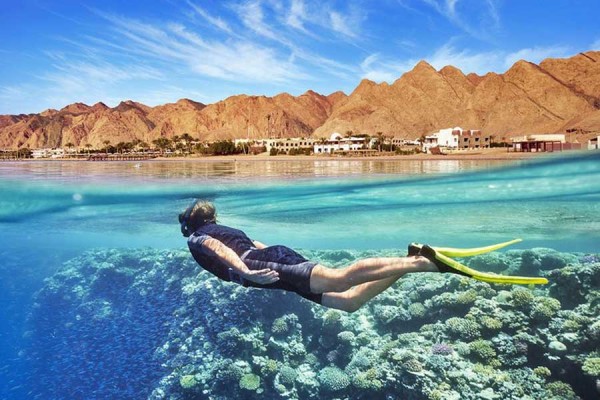
Along the coast of the southern tip of the Sinai Peninsula you find many more dive sites that require less experience than the Straits of Tiran or Ras Mohammed dive sites, yet are still extremely rich in corals and marine life. These are, from north to south: Ras Ghamila, Ras Nasrani, Ras Bob, White Knight, Far Garden, Middle Garden, Near Garden, Sodfa, Tower, Amphoras, Turtle Bay, Paradise, Ras Umm Sid, Temple and Ras Katy.
These dive sites with their sandy plateaus and pinnacles but with the absence of strong currents are very well suited for beginners or for courses. Yet they are still very attractive for experienced divers due to the beauty of the dive sites and because of the big fish like mantas or whale sharks that can be seen there now and then during the summer months.
Umm El Sid
- Depth: 30 M
- Difficulty: Intermediate
- Type: reef garden, shallow, corals pinnacles
Temple - Local
- Depth: 20 M
- Type: reef garden, corals pinnacles
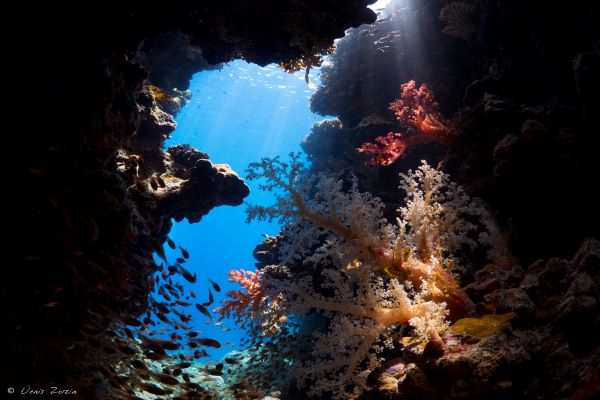
The bay of temple got its name from the old time divers that were diving there. The bay is very flat ranging from 10 – 18 metres, as the diver’s swan through the bay they came across the looming pinnacles that looked like an underwater Temple. The dive is a mooring dive starting at the front of the pinnacles, dive down the left hand side where a feisty clown fish lives, follow the sandy path to a deeper pinnacle where the top is 12 metres and the bottom is 18 metres, the currents are normally mild here but usually hit this left side of the pinnacle to the top section is full of sort corals, pipe fish and glassfish. Follow this pinnacle to the right and another huge pinnacle is in front of you – this has a fun swim through at 18 metres and comes out vertically out at 14 metres. Head across to the main pinnacle and search for the Amphora that found its way here from the wreck at Amphora’s Dive sites. The main pinnacle has a crack down the middle from the 1995 earthquake that hit Sharm El Sheikh which lends itself to another fun swim through.
Amphoras - Local
- Depth: 30 M
- Difficulty: Beginner
- Type: Drift dive, reef, corals pinnacles
Ras Ghamila - Local
- Depth: 30 M
- Difficulty: Intermediate
- Type: Drift dive, reef garden, reef, coral garden, corals pinnacles
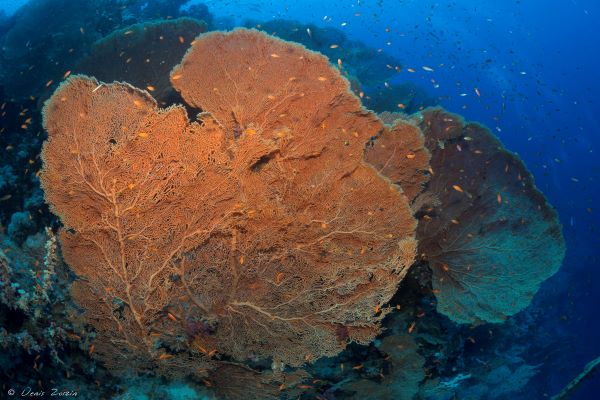
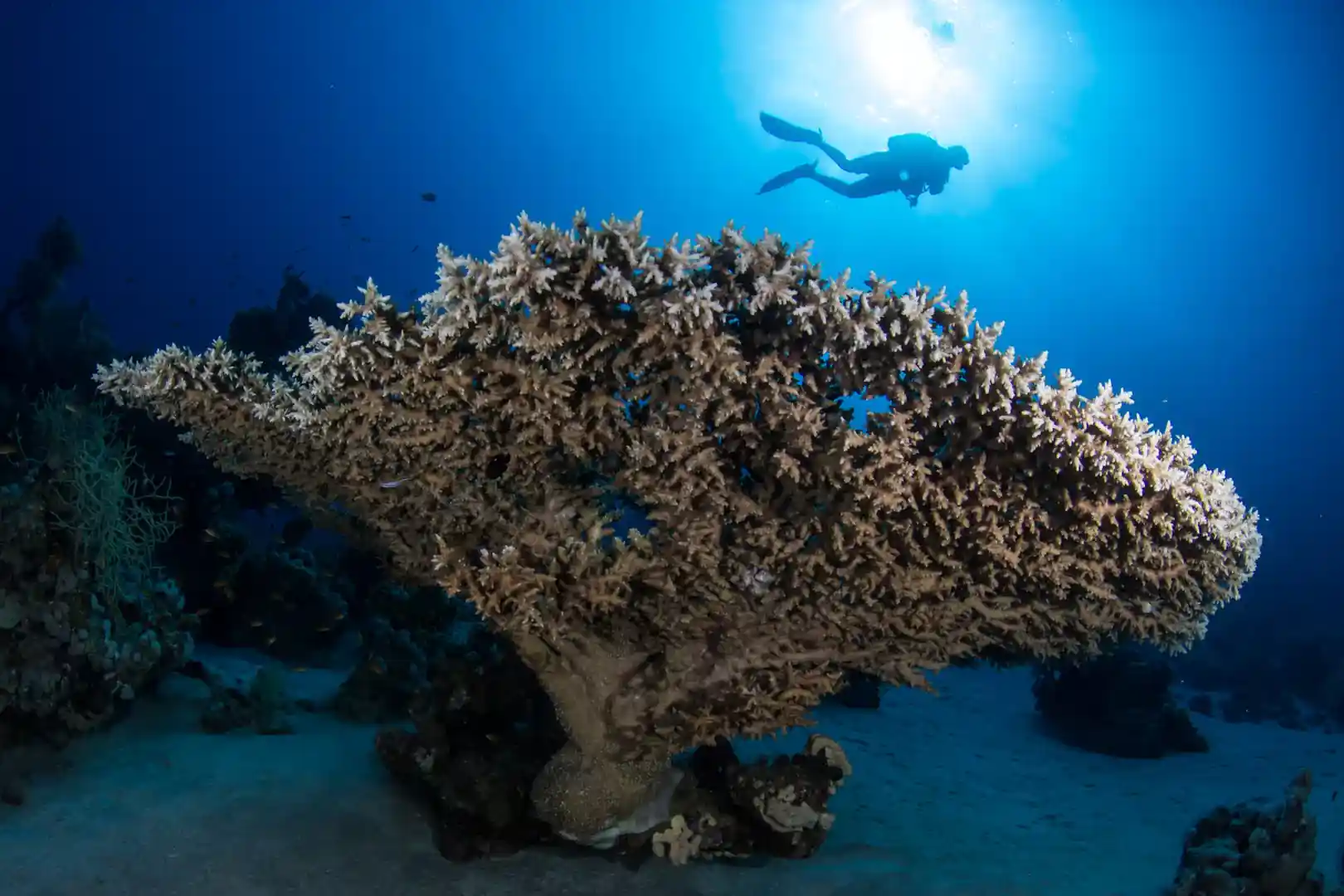
The most northerly of the local dive sites Ras Ghamila is definitely aptly named. Ghamila in Arabic means beautiful so the dive site name means beautiful head. The reef wall descends to just 12 metres with a long slow descent towards a drop off at least 100 metres away. The divesite is a mostly flat bottom covered with hard corals but sprouting from the sea bed are ginormous gorgonian fan corals, around the fans often turtles can be found or schools of glass fish. Use your imagination on this divesite as some are sure under the corals here is a very very old shipwreck, not visible to the eye now but some of the shapes of the coral are at odd angles. In the shallows there are sandy patches where feather tailed rays are often found.
Ras Nasrani - Local
- Depth: 30 M
- Type: Drift dive, lagoon, reef garden, reef wall, reef, drop off, corals pinnacles
Ras Bob - Local
- Depth: 30 M
- Difficulty: Beginner
- Type: Cave, shallow, reef
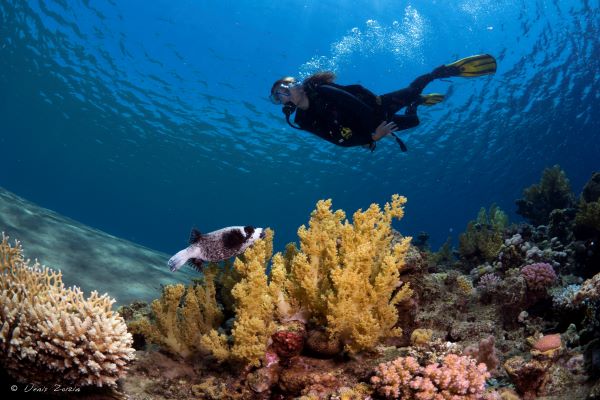
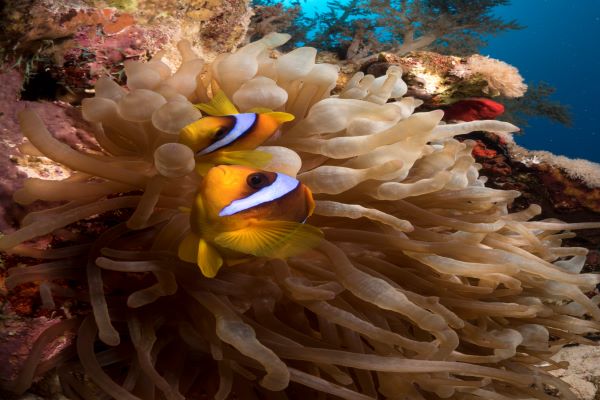
Previously named Labyrinth due to some shallow swim through caves but renamed after the videographer Bob Johnson a former Sharm El Sheikh dive guide who filmed an underwater advertisement for the UK bank Cheltenham and Glouchester, the columns seen in the advert were put there only for the commercial and cannot be seen there today.
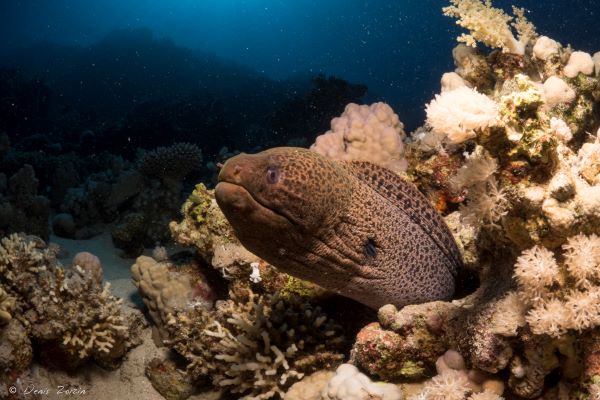
At a depth of approx. 22 metres there is a large eel garden, the dive is best done in shallow water and octopus are often seen here, groups of Sergeant majors hang in the shallows.
Far Garden - Local
- Depth: 30 M
- Difficulty: Beginner
- Type: Big fish, Drift dive, reef wall, dolphins
As you sail north from Naama bay the very next bay is “The Gardens” closest to Naama bay is Near Garden, furthest away is Far Garden, in the middle is of course Middle Garden and between middle and far is Fiddle Garden
Far garden
At the beginning of the dive are 2 coral pinnacles reaching nearly to the surface, this is a great place to slowly descend whilst looking around for the smaller things in life, look closely for the blennies popping their head out of their holes, as the dive continues the reef is a wall but not entirely vertical with pinnacles between the reef plate and the drop off. Unusually, often seen on the floor here are upside down jelly fish that look like a bowl of rice pudding with almonds sprinkled on top. As the dive gets closer to the end, the reef plateaus’ out, in the summer months this corner is a great place to see whale sharks, mantas and even the odd hammerhead shark has been spotted here. Another fabulous place to watch octopus changing their colours and texture, and watch out for the many napoleon wrasse that live in the area.
Fiddle Garden - Local
- Depth: 30 M
- Difficulty: Beginner
- Type: reef garden, shallow, reef, drop off, corals pinnacles
As you sail north from Naama bay the very next bay is “The Gardens” closest to Naama bay is Near Garden, furthest away is Far Garden, in the middle is of course Middle Garden and between middle and far is Fiddle Garden
Fiddle Garden
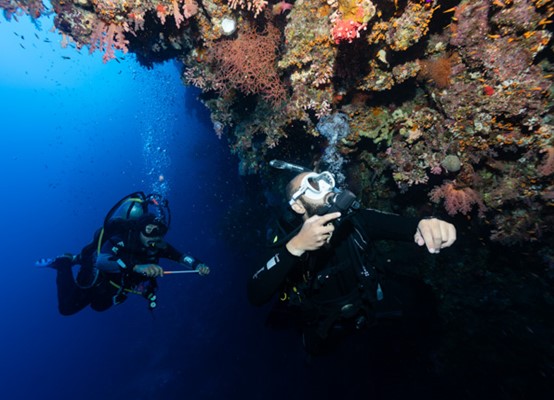
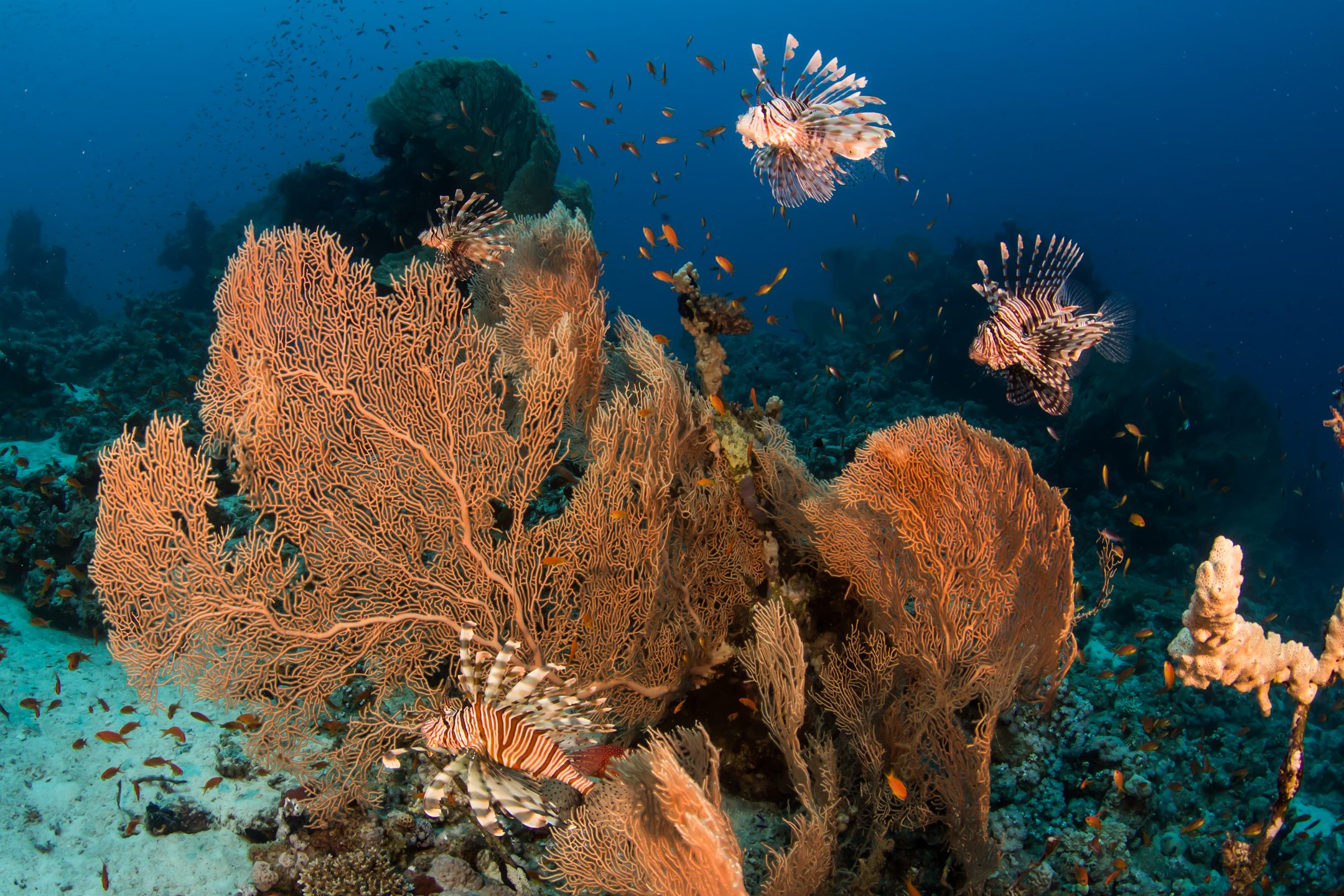
The reef wall descends to 6-8 metres on to a sandy sloping bottom that gradually drops away to 18 metres at the drop off, following the edge of the drop off with the reef on the left there is a glassfish pinnacle between 10 and 16 metres. This pinnacle was featured on a British children’s wildlife program where a challenge was given to get your teeth cleaned underwater, if you dare, take out your regulator and see if the cleaner wrasse will clean yours.
Middle Garden - Local
- Depth: 30 M
- Difficulty: Beginner
- Type: Drift dive, reef garden, shallow, reef, corals pinnacles
Near Garden - Local
- Depth: 25 M
- Type: Drift dive, corals pinnacles
As you sail north from Naama bay the very next bay is “The Gardens” closest to Naama bay is Near Garden, furthest away is Far Garden, in the middle is of course Middle Garden and between middle and far is Fiddle Garden
Near Garden
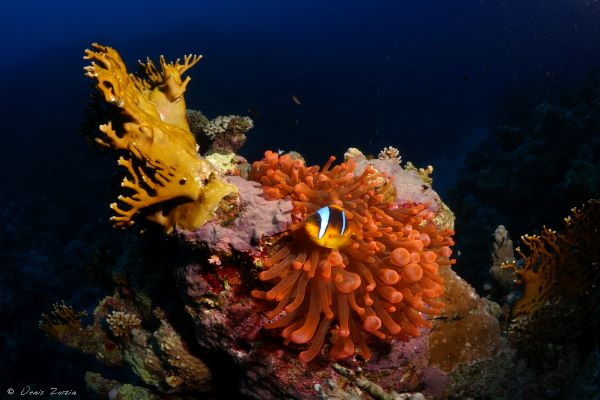
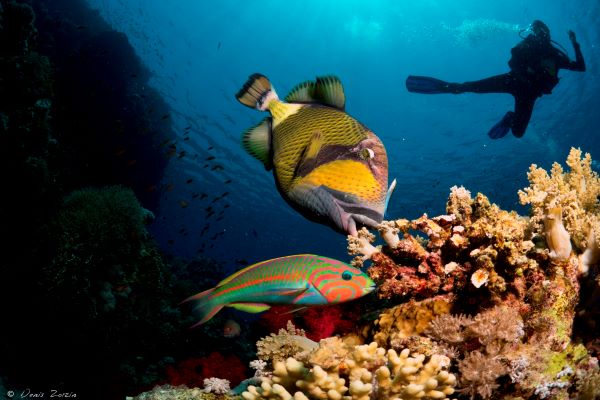
The reef wall descends down to 8-10 metres then slowly slopes to the drop off at 18-20 metres, another fabulous topography site filled with pinnacles dotted throughout the dive, staying at 18 metres at the beginning of the dive with the reef on the left you can find one of the most truly magnificent red anemones just ahead of this is a glassfish pinnacle that those with cameras could get stuck on for the remainder of the dive, nudibranch, shrimps, blennies, christmas tree worms and banded pipefish are just a few of the creatures found on this pinnacle. Towards the corner the drop off ridge stretches out into a flat bottom with large fan corals at about 22 metres. Turn the dive and come up to a row of pinnacles that indicate the corner of near garden and the beginning of the bay, as the current is usually strongest here the soft corals are healthy and colourful. There is a dead area in the shallows which has been named this since the early dive guide map books, keep your eyes peeled on this site for mantas in the summer months.
Tower - Local
- Depth: 30 M
- Difficulty: Intermediate
- Type: Drift dive, reef wall, corals pinnacles
Lighthouse
- Depth: 30 M
- Difficulty: Beginner
- Type: shallow, reef, corals pinnacles
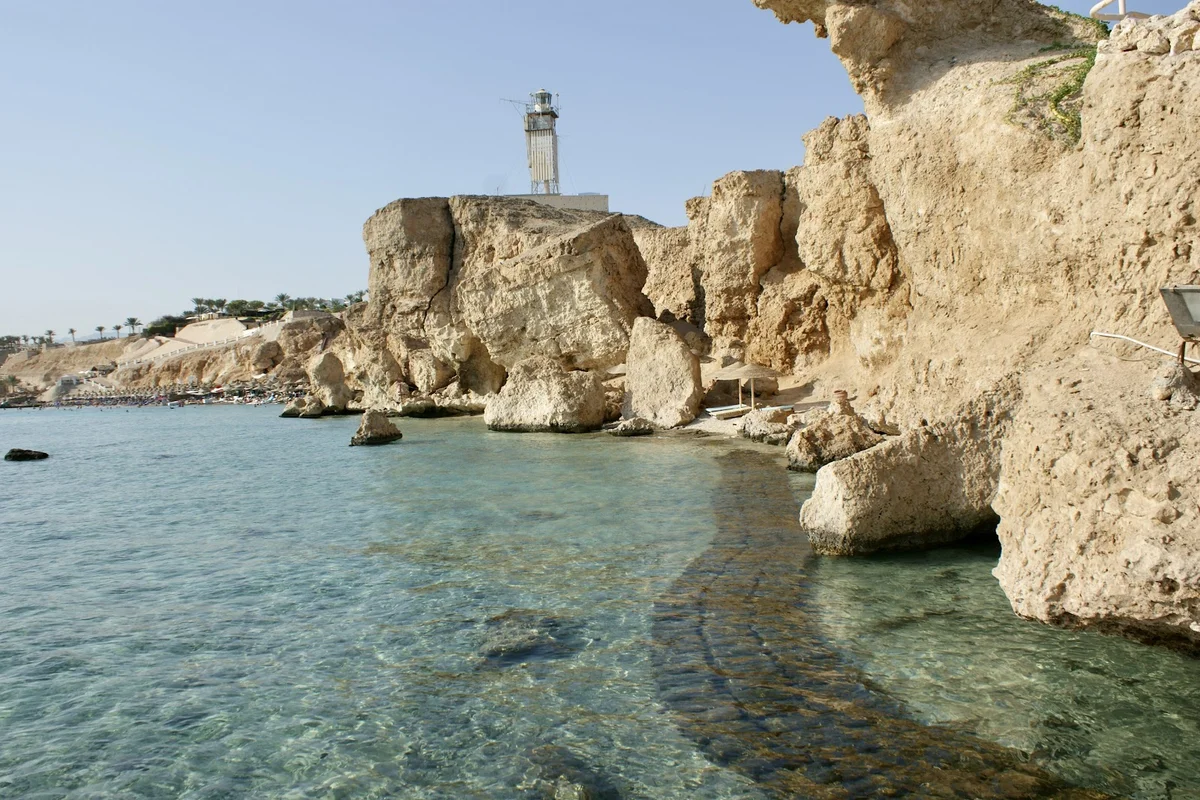
The Lighthouse dive site is situated at the northern end of Dahab Bay it’s a popular dive site as with its gradually sloping sandy bottom its perfect for all levels of training but also a great dive site for those just wanting a swim around. Entries and exits are easily accessible and the site is normally always sheltered from the wind.
The dive site lends itself to a buoyancy park for training and some underwater props and statutes have been erected here – most magnificently is an Elephant made up of old junk
As you head out over the sand you will find seagrass covering the sloping bottom, swim slowly and search for seahorses and seamoths in this area, they are usually found in pairs. On the left you will come across a reef wall, follow this northward and you will come across large pinnacles covered in corals and full of marine life.
Blue Hole / Bells
- Depth: 30 M
- Difficulty: Intermediate
- Type: Deep dive, reef, coral garden, corals pinnacles
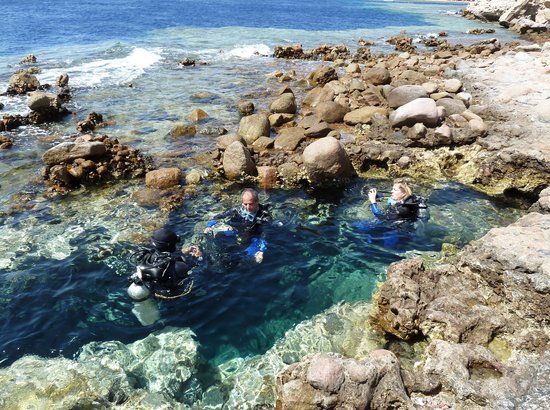
Probably one of the most famous dive sites in Egypt, the Blue Hole/ The Bells is accessed by shore and can be done either as the Blue hole alone or more fun is to enter at the Bells and swim to the Blue Hole.
The kit up area is at the Blue Hole then about a 150 metre or so walk to the entrance of the Bells. The Bells entry is a small hole (approx 3 metres long by 2 metres wide) and descends into a sort of chimney that has an opening in the top section on the sea side.
The name it is said comes from two possible origins – 1) the shape of the chimney how it narrows and widens in the shape of bells and 2) the sound that tanks make when they touch the walls as divers descend one by one down through the chimney.